

Nathan of Brainfertilizer Fame
-
Posts
5,288 -
Joined
-
Last visited
-
Days Won
32
Content Type
Profiles
Forums
Events
Everything posted by Nathan of Brainfertilizer Fame
-
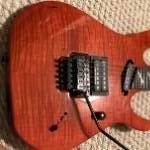 I still love my Jon Kammerer guitars. The headstock may need getting used to for some, but his guitars have amazing craftsmanship, and he'll do a complete custom for far less than Hamer. I imagine you could get him to do a very close replica to a Californian, complete with Boomers. But he has his own body styles, and they are very comfortable to play and sound great. The economy has been hurting him, tho, so he could use some business. His contact info is: 222 Timea Street Keokuk, IA 52632 (319) 526-7651
 -
just another reason to hate Fender...
-
Single coils are the sh*t.
Nathan of Brainfertilizer Fame replied to zorrow's topic in Hamer Fan Club Messageboard
I really like heavy metal sounds, so I gotta have a double-coil in the bridge. But I hate double coil sounds in the neck. It is difficult to get a sound that isn't too saturated for me (interestingly, I like to listen to saturated neck position HBs on songs by others, but can't stand the saturated sound when I'm playing). So I gotta have single coils in the neck. I love an HB/S combo, like in my Cali and Vandenbergs. But about a year ago, I really started to dig the 2/4 position quacks. I've found that one of the best guitars out there with the most different quacky sounds is, of all things, an Alvarez Dana II or Custom with the Tri-Force pickup configuration. The 3 triple coils together look like the Hamer Prototype, but I have no idea whether they are wired up the same or not. In any case, I've found that I can get a far greater variety of tones with single coils than double coils. Part of it is I think humbuckers smooth out tonal variations, maybe. But an E played in the same octave on the 6 different strings sounds with single coils much different than the same E played in the same positions on all 6 strings with a humbucker. Changes of picking angle, pick attack, and even partial muting change tone color much more on single coils than humbuckers, leading to that broader palette of tone colors. In my opinion, anyway. So I love H/S/S the best, especially if I can get a coil tap for the HB. -
Sometimes my blueburst Centaura Deluxe comes up on lists like this... Of course, it is BCR Greg's photographic skill that makes so many of these guitars look so awesome...
-
Zep and Bad Company were from the era of Album-Oriented Rock (haven't you ever heard of AOR radio stations?), where they tried to make every song a quality piece of music. I love/miss that era.
-
I'm not suggesting we coddle artists, only pay them the same way we pay for other products we choose to own. I also don't need a number because I'm not suggesting that since "some" consumers are paying the artists should quit complaining. I'm suggesting every song that is downloaded should be paid for, so the number of illegal vs legal doesn't make or break my position as it does yours. Eh, you may have misunderstood my point. Which is only fair, because I probably obscured it too much. I'm not defending illegal downloads. I, too, think that people should pay for what they download. I am saying that fighting against illegal downloads is a waste of artists' time. I am also saying that the fact that there is a huge market for legal downloads, and a huge market for illegal downloads, is a moderately unambiguous sign that many artists are overpricing their product. Many (but not all) artists have a choice: illegal downloads or zero downloads. Meaning, the value of their work is not even $1/song. They need to face it. Other artists have a choice: illegal downloads or cheaper downloads. They need to use whatever level of fame they have to add value to a download if they want to maximize the price. If they want to just make music and not be bothered with marketing, they must accept lower pricing. But there will always be some theft, because some people are always thieves. You can't price candy bars cheap enough to never have shoplifting. So now that we know that: 1) ending all illegal downloading is impossible 2) illegal downloading is vastly reduced if the music has a fair price 3) the fair price (as set by the market) is often lower than the current prices in the current system Thus: 4) Artists need to face up to the fact that if they really want to be an artist, they need to have a full-time job separate from their music. It can be a corporate job, it can be in the service industry, or it can be marketing their own work. But the days of making a living as a professional pop music star have (at least temporarily) changed beyond recognition. Being a rock star was always about selling yourself to some extent, not just your music. That just got kicked into overdrive. The fact is, entertainment options are exploding. People don't need to listen to new music anymore, not when there are massive catalogs of music. When I was a kid, having 80 cassette tapes was a pretty big collection, although there were certainly some with 200. Now, having 800 different albums on your iPod is nothing. And that's just a classic rock collection. What's the answer? Dunno. I think it will all shake out. Some artists will be left behind, just like when video killed the radio star. Just like when Grunge killed Hair Metal. Some will prosper. New artists will rise. A new business model will emerge. It sucks in the meantime, but no one is owed anything. Music won't die, even if the the industry does.
-
We are absolutely not on the same side of the argument A need to be coddled by an artist in order for you to feel like they deserve your money in return for their product is silly. The cost of marketing required to give everyone that warm fuzzy would likely more than negate any revenue increase seen as a result. Just for fun, do you know how many copies of Adele's Rolling in the Deep were obtained illegally vs legally? Of course you don't. But until you do you can hardly keep pointing to how many copies are selling legally in iTunes and Amazon as a basis for your argument. Arguing that artists need to be coddled by society is even sillier. Do you know how many illegal copies obtained would have been sales if the illegal download weren't available? Of course you don't. But until you do, you can't really use the number of illegal downloads as a basis of your argument.
-
My bottom line is basically: The new digital medium is reality. Reality sometimes sucks. Light a candle, or curse the darkness. Your choice. I choose to light a candle, and urge everyone to do the same.
-
This is only true if your fan bases are equal. Assuming hers currently dwarfs yours, she stands to lose much more. Perhaps. But she has also already earned much, much more, under the old model. Perhaps she should consider that artificially-reduced-supply era income as an advance on what she is "losing" now. She only had to convince maybe one record company exec to sign her, and perhaps one or a handful of people at MTV to put her video in heavy rotation, and then she was set for life. I will have to work 300 times as hard as she ever did to make 1/300th of the money. If she doesn't have enough money to live on, it is only because she wasted her earnings from before. So from that perspective, I have more to lose in the game than she does. If someone posted my name in a blog, and her name in a blog, whose would get recognized? What is she doing with that name recognition to enhance her earnings?
-
Another aspect on the horizon: 3D printing. Before too long (20 years?), it is going to be possible to print out a functional guitar that sounds as good and lasts as long as a USA Hamer. Some will still buy wooden guitars. Most will not (due to economics). After another generation, wooden guitars will become a curiosity. Guitar makers will go bankrupt. People will be online complaining about guitar designs being stolen and printed. Another industry will end up on the dust bin of history. Many people will be sad. Other people will be happy about cheaper but still excellent quality guitars. Or look at an older issue: Japanese imported guitars copied US guitars. US guitars sued. The result was certain terms couldn't be used (Stratocaster) and certain headstock shapes couldn't be used. But was it the headstock shape that sold the copies? Or was it that equal quality could be acquired for lower cost? I have no problem with the lawsuit forcing the imports to change their headstock shape. But you can't copyright quality. And the angle of an outer contour of wood had little to do with how a guitar plays and sounds. Yet Gibson and Fender had built up their brand enough that some people still swear by them and pay a premium to have the name on the headstock. The point of bringing up these other issues is I think they are all related: how to make money by providing a good or service, and how to keep that good or service unique enough to command premium prices in the face of cheaper (or free) competition. Looking at illegal music downloads in a vacuum hampers understanding, in my opinion.
-
The discussion around David Lowery's rant isn't what X artist should make relative to Y artist, but only that they should both be paid. That "should" in your statement is very dangerous. Who provides the money for Artist X and Artist Y? If that money isn't provided willingly, it is slavery. If it is provided willingly, then by what right does Artist Y demand a living wage from his/her efforts if the audience isn't willing to pay it? Throw another straw man into the fire, eh? Your comments seem to imply musicians want to be rid of the concept of supply and demand altogether, and they all MUST be paid an equal amount regardless of quality. No one is suggesting poor product will be rewarded under ANY system. Let's assume artist X makes a great song and artist Y makes a bad song. They're both paid equally for their efforts in that they each receive $0.25 for each legal download. The song by artist X is downloaded four million times, putting a cool mil in his pocket. Artist Y's song only reaches four thousand downloads, netting him a paltry $1k for his efforts. The market is this example is completely consumer driven, there's no slavery (not sure where that even came from), and the artists are being paid an amount relative to their worth, as deemed by the customer. If you want to relate it to slavery, the closest example in this debate is expecting artists to provide music without our needing to pay for it. But again, the OP and the link weren't trying to address RELATIVE worth, only that there IS worth. I'm not the one complaining that artists can't even make as much as schoolteachers. I'm saying the market should decide what artists' efforts are worth. Last time I checked, iTunes and Amazon seem to be selling a whole bunch of legal downloads, yet artists and potential artists are still complaining. Are we actually on the same side of the issue but arguing slightly different points? I'm not supporting illegal downloads. I am saying that the demand for illegal/free downloads can be undercut by artists doing a better job marketing and adding in value-added aspects (like autographs). One aspect of marketing is the personal touch: I'd never download an illegal copy of Generic Hustle, because I know and like Brooks. Even as little as I know him (only through online contact), I have a social incentive to help him make money. Is that too hard for artists to do? They don't increase that social commitment by whining, I can tell you. Lars Ulrich probably hurt Metallica's bottom line with his advocacy more than he helped. That's being penny-wise and pound-foolish.
-
At the risk of forcing this to go to the Outer Circle, it is interesting to note a similar situation happening in another field: amateur porn is significantly harming the profitability of professional porn. Is that different? (I can delete, if necessary)
-
Are you a full-time novelist? Do I have to be for my opinion to count? It's easy not to be concerned with profit from your novel when your ability to put food on the table doesn't depend on it. Ah, yes: some animals are more equal than others. There should be an Orwell equivalent to Godwin's Law. I guess it isn't enough that I aspire to be a full-time novelist, and that I'm aware enough to see that the new digital environment creates opportunities along with the threats to traditional earning models. Not at all, but aspirations are meaningless if you can't sustain yourself in your chosen vocation. If you chose to live on your military pension one day and produced novels merely for the satisifaction of doing so, then profit becomes a secondary concern. Sure, you're a "full-time novelist" and the extra dosh is nice, but you have no worries when it comes to providing for yourself, or your familiy. An artist who depends on sales of his output, no matter what the medium, to put food on the table generally sees profit as a driving motivator. But aren't my efforts just as worthy, whether or not I need it to feed my family? If I live off my military pension, I still want to get paid for my efforts, just like an artist that makes just above poverty-level income might want enough to purchase a new car, or eat out at a nice steak restaurant once in a while. Or are you proposing a cap on earnings by a full-time artist to precisely match the poverty threshold, with the rest to go to charity? The point is, whether or not I depend on writing to actually eat, I intend to write in order to earn money, fame, and adulation. The ability of thieves to digitally copy and profit from my effort still exists. Even if my survival needs are met, I still want to earn enough to buy a bigger house, drive a BMW 7-series, and travel around the world for a year. I face the downsides of the digital revolution as much as Aimee Mann, so my money is where my mouth is. Your attempt to disqualify me and my opinion based on my current employment is inappropriate and incorrect. After all, any musician can still work 40 hours in the service industry to put food on the table, and still have twice as much free, non-sleeping time to make music. Many famous musicians did that before they "made it" big. Why is that beneath the current artists?
-
The discussion around David Lowery's rant isn't what X artist should make relative to Y artist, but only that they should both be paid. That "should" in your statement is very dangerous. Who provides the money for Artist X and Artist Y? If that money isn't provided willingly, it is slavery. If it is provided willingly, then by what right does Artist Y demand a living wage from his/her efforts if the audience isn't willing to pay it?
-
Again, no one's talking about lavish incomes here. Teachers salaries aren't even being earned by most musicians. How much has Aimee Mann made on her music? It is her letter that stimulated the conversation, so yeah: when I think of Aimee Mann and the profits she made off of "Voices Carry" alone, I'm wondering what she is complaining about, and that colors my input. But, yeah, there is a wide range of musicians we are talking about here, and the reality Aimee Mann faces is different than what Steel Panther faces, and they have advantages Joe Smith trying to make a career as a guitarist doesn't have. But wasn't Joe Smith going to face difficulties making a living under the old model, too? How much has Jessica Black made from "Friday"? How much should she have made from it? Is her success stealing from "real" artists? I'd still like to know: what should an artist make? Who decides how much they should make? Do reggae artists deserve more than blues guitarists? Or vice versa? I'm in favor of letting the market sort it out, and I repeat: this is probably a dark ages for musicians, as we transition from the old business model to the new. In 10 years or 20, it will be possible again to make a decent living as an artist even within the digital age. Someone will figure out what it takes to get people to pay money, and how to distribute wide enough so enough people pay enough money to have a good enough living. In the meantime, it sucks. I could probably be more sympathetic, but I think tough love about facing up to the cost/risk analysis of the current business model is probably more helpful in the long run. Even if it pisses people off in the short term.
-
That is one question. Others are: How much should they make? Who decides? What efforts should they have to make when a percentage of listeners will download free copies instead of official copies? I'm not trying to pretend there are easy answers to the questions. I've generally been of the opinion that the seller always overvalues the value of their merchandise, and the buyer usually (but not always) undervalues the same merchandise. But a compromise has to be reached by both parties to make a sale. What is my guitar worth? To an extent, what a buyer is willing to pay. But recently I got an extremely fair offer for one of my guitars, yet I didn't sell it. The reason why is although it was a fair market price, it wasn't enough for me: the guitar was worth more than that to me. If enough people have the same opinion and aren't willing to sell for less, then that extremely fair offer is no longer a fair offer. Or let's say I love my Fender Squier Affinity that I bought used for $20. Let's say I love it more than I love the toppest-top-of-the-line Suhr. Should I be able to get $3000 because that's what I'm willing to sell it for? Of course not. So maybe musicians are pricing themselves out of the market by holding on to an outdated pricing model. From what I hear, iTunes has sold millions and millions and millions of downloads. Amazon is doing pretty well in downloads, too. Someone is buying digital music, and the price point where it isn't worth it to steal seems to be about $1/song. Is that unfair? If Aimee Mann can't get $1/song, what does that mean? That everyone in the US is a dirty thief, or that maybe her music isn't worth as much as it used to be?
-
Are you a full-time novelist? Do I have to be for my opinion to count? It's easy not to be concerned with profit from your novel when your ability to put food on the table doesn't depend on it. Ah, yes: some animals are more equal than others. There should be an Orwell equivalent to Godwin's Law. I guess it isn't enough that I aspire to be a full-time novelist, and that I'm aware enough to see that the new digital environment creates opportunities along with the threats to traditional earning models.
-
If true, that undermines your argument. If good artists putting out pro-quality stuff is still fairly rare, then it should be easy to separate from the pack and still make money. Maybe not as much as the artists want, but...Is there an objective value for recorded music? Of course not. An artist should invest in themselves, in proportion to what they can earn from that investment. Even a cheap DAW on a cheap computer has better output than a $100k recording studio from the 60s. But even though it is cheaper, it is still a risk. I guess I just don't get this attitude that the world owes someone a lavish income because they can use auto-tune and know how to strum cowboy chords. Yep, that all sucks. What guaranteed income are you proposing for artists? Who determines who gets to be designated an artist?
-
Are you a full-time novelist? Do I have to be for my opinion to count?
-
Never bought that rationale. Who's to say that the whole album isn't good? Radio has conditioned people to believe it isn't because they only play one or two songs over and over again based on some bean-counter's market analysis spreadsheet. Ever tried it yourself? It's a grind, believe me. And it shouldn't be a substitute for getting paid for something you invested money into to create. It wouldn't be so egregious if people were ignoring the work versus obtaining it for free and enjoying it. I've done more than my share of grinding and sacrifice to earn the amount of money I need for the lifestyle I want. Why should professional musicians be any different? One reason I'm not a famous rock star right now is because I compared the costs of having to go to LA and grind through the bar scene versus the possibilities of getting famous and decided it wasn't worth it to me. The only reason I'm not a professional symphonic musician is I decided that the lifestyle and pressures and cutthroat nature of the business wasn't worth it to me. I'm not a music teacher because I decided (after 4 years of majoring in music, unfortunately), that what I really enjoyed about music was performance, not just being "in" music. So I make music for the enjoyment of me, my friends, and my family. I have chosen to support my family in other ways. I will not become a General in the military because the level of political ability it requires is beyond me. I didn't develop those abilities because I felt it required the sacrifice of some of my principles, and it wasn't worth it to me. These are choices I made. There is no such thing as a free lunch. If someone stumbles on a way to make money without much effort, other people will follow and the new competition will make it impossible to make money so easily. For the most part, making lots of money requires hard work and extreme sacrifice. Making moderate amounts of money requires hard work and moderate sacrifice. Making a little bit of money requires hard work and little risk/sacrifice. That's the way of the world. Musicians are not as special as they seem to think they are...for every famous singer, there are a hundred or a thousand that can sing just as well but never had the chance...Same for guitarists. Probably the same for songwriters. Several generations of musicians received the benefit of an artificial restriction of supply by the gatekeeping of the music industry. Technology has destroyed the effectiveness of that gatekeeper. Fair or not, injustice or not, this is the current circumstance. I understand that it sucks, and do have some measure of sympathy that the new situation sucks. But not enough to willingly go back to the old system. By the way, I am close to completing my first novel. I recognize that the day of $40k advances for successful novelists is gone. I realize that I will have to market my butt off and choose the correct pricing to sell more than to my family members, but in my opinion, that is balanced by the fact that I am not being kept out/down by the publishing industry and can get my work to potential readers w/o gatekeepers. But part of the environment will include people disseminating digital copies in a manner that undermines my earning potential. That's life.
-
Another minor point: The music industry is in turmoil right now. I do think that people are willing to pay for what they consider valuable. The problem for musicians is that the radio and recording industry created an artificial restriction of supply to get demand high enough to charge $20 for a CD, but now the supply of good artists that can make professional-quality recordings has increased exponentially. That means that listeners can get all sorts of great music for free, which undermines the value of those trying to make a living recording music. It sucks, but guilt trips probably won't help. It may take a generation or two, but I do think it will be possible to make a comfortable living as a musician again someday. That may be through endorsements, a patronage system, live performance, commissions, giving lessons, and better marketing. Consider this the music dark ages, but I'm sure that it will all shake out before too long. It may mean that an artist has to do things they don't want to do, like marketing. But again: that's life. Most people have to do things they don't want to do in order to make enough money to support themselves at the level they want. Musicians aren't exempt from the laws of supply and demand. I look forward to a fuller understanding of market systems to take hold among musicians, because right now, the whining is drowning out what would otherwise be excellent music. I say this as someone who has paid 2 different "amateurs" for private recordings via this website. True, I paid a pittance for Brooks' CD, bargain-basement clearance. But I'd pay more for a second CD if he has one available, and I have spent my own time praising his stuff on three different occasions. My question for artists who complain about music downloads: why do you consider the time your fans spend marketing your music for you to be valueless? Why don't you appreciate and pay them for the marketing service they are currently giving you for free? Kinda hypocritical to complain about the cheapness of fans when you yourself are benefiting from your own freeloading.
-
Three points form the foundation of my opinion: 1) Technology changes, and when it does, it drives people out of work. The ability to make money in perpetuity from a single recording of one's work is actually an aberration when you look at music history. For about 60 to 70 years, it was possible to get one excellent performance on tape and live off the proceeds for life. Before that, you had to keep writing or keep performing to make a living. Technology made it possible, and then technology took it away. That's life. Find a new business model, or make music for the fun of it, like most people have done throughout most of history. Who knows, maybe the patronage system will return? 2) To a certain extent, this is a self-inflicted wound by the music industry. i) By packaging only 1 or 2 decent songs with the rest of the album being filler, but charging a price as if the whole album was good, the industry was screwing over fans for decades, and karma is a bitch. ii) By charging $20 for a CD that cost $.25 to make, and not allowing the market to set the price of what it was worth, the industry was screwing over fans for decades, and karma is a bitch. iii) By using the radio to popularize music, the industry conditioned fans to a visceral feeling that music should be free. Sure, that's the industry, not the artist. But for current famous artists to complain about the seismic shift is ridiculous. They have the name recognition to market directly to their fans and let the market set the price on what their music is worth. New artists don't have that advantage. Sure, that means artists need to develop marketing skills, and time spent developing other skills reduces the time available for developing musical skills and new music. Well, that's life. Nothing is owed to you by life or the American music-listening public for you having once earned a recording contract or two. 3) the whole idea of music copyrights is dysfunctional to begin with. There are 12 notes. Everything is based on that. Why should a current artist get to mine centuries of music example and knowledge for free, while making their own derivative works off-limits? And what is the bright line of fair use? If I play your song in my bar list, then I owe you money. But what if I whistle your melody as I walk down the street? What if I have a perfect memory and replay your song in my mind? Shouldn't the bright line be whether I make money off your efforts or not? But then how do we handle classical music artists, who make ***ALL*** of their money off of excellent performance of works they did not write? Why can't I do the same thing with rock guitar, then? And what if I listen to your same influences you do, and come up with a similar lick or sound or melody phrase...you got it on tape first, and now I owe you money even though I never once heard your song? What kind of sense does that make? And why should Hendrix's relatives still be making money off of Jimi's musical genius? Is that fair at all? Why was Michael Jackson able to purchase the rights to the f'n "Happy Birthday" song? You do know that's why restaurants have to develop their own Happy Birthday clapping chant, right? You can't get a restaurant staff to sing Happy Birthday to you on your birthday because that restaurant risks getting sued. Conclusion: Throw it all out. Start over. Earn money through performance of your songs. Anything else should be considered gravy, and the price set by the market.
-
Tobereeno, Sorry dude...I truly am, but after actually seriously playing it again (just about the first time in 2 years...it has been in a case the whole time, as I forgot how much fun it was to play), I decided that regardless of what it is worth on the open market, it is worth more than that to me. $1500 is an offer I couldn't refuse, so that's where the starting bid is. $2500 is only in case there is some rich individual with money burning a hole in his pocket who doesn't want to risk me cancelling the auction. But until the auction ends, I am still offering it to HFCers only at what I paid for it, $900. While I admit that is probably higher than the going rate, at least it stays within the HFC family, and even after the auction ends, anyone who wants it knows I have it and can open negotiations with a new offer at any time. Who knows? Maybe there's a MIK shredder you have sitting around that would sweeten a cash offer... I'd take a chunk off the price for a MIK S series Ibanez w/ the Zero Resistance trem (depending on which level S5xx would make me happier than S3xx)
-
Really? I've *always* hated it when someone cancelled an auction without any explanation at all. This way, at least people know why, and it is still available if someone simply has to have one right now no matter what. ...and if someone goes for the new price I set, the other 19 or so people who own Chaparall 12-strings all owe me a beer.
-
...well, the other choice was to cancel the auction and not even offer it HFC members for $900 (what I paid for it). [shrug] No one had bid, so it isn't like anyone was biting even at $600. If they were trying to snipe to get it cheap, that's the risk you take in not bidding early. Had anyone bid, I would have had no choice but to honor the implied contract and sell it for whatever the bidding process resulted in.