Jump to content
Hamer Fan Club Message Center
  • 0

neck shim: angle or raise it up?


Jimbilly

Question

Posted

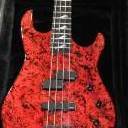
I bought this '77 Ibanez the other day, I'm guessing a shim at the pickup side of the pocket rather than raise it up?, and what material is recommended?  The truss rod is already set 'about right', the action should be just a bit lower. 

 I've got some wiring stuff to go through later, but a J control setup is pretty straightforward, the pots don't look original, I imagine the pots used on this may not have been the highest quality? 
challenger bridge.JPG

challenger hs.JPG

challenger neck.JPG

5 answers to this question

Recommended Posts

Posted

Pre-made full-size neck pocket shims can be found easily on Ebay for both basses and guitars.  The ones I see most often on there are ones made of maple but they can come in different woods too, they come in various thicknesses, and are fairly inexpensive.  As long as the shim material isn't too soft and compresses too much under the pressure, it should work well.  Plus, if you're only looking to just add height and body thickness to the neck pocket area and not mess with the neck to body angle, then it should be pretty easy to do, and be no more difficult than unbolting the neck.  If you need more height/body thickness, you can simply slide in another shim and/or stack them.

Posted

IMHO, angled shim would be the best way to go, and will get you where you want faster. If you look online you can probably find the story of the custom shop fender guitar that had a baseball card in the pickup side of the neck pocket. Shims were and are a standard part of the setup of bolt neck guitars, and I've heard that people have found things like guitar picks, piece of scrap plastic, etc.. Whatever was on hand was used. The original Fender Jazzmaster and Jaguar guitars were actually designed with the "micro-tilt" system, and pretty much would not have a correct neck angle until that or a shim was used. Later Fender decided that maybe an angled neck pocket was a good idea.

It wasn't until recently that pre-made shims were available.  EBMM uses small plastic shims that go around the last set of screws in .005", .010", and .015" thicknesses, so a little goes a loooong way.

As Crunchee mentioned, you can find full neck pocket shims just about anywhere now, and most of them increase the overall height a smidge, and are usually 0.25, 0.50, and 1.00 degree changes in neck angle. Those are usually set up pretty standard "Fender" style, with four holes to hold them in place around the attachment screws. They are available in wood, plastic (which doesn't compress nearly as much), and even other materials. There are also Music Man style shims that just go around the last set of screws available in brass and other materials.

Posted

The pre-cut wood shims are superb for quelling one's OCD tendencies, but not needed. As detailed in the last reply, the last Ibanez J- clone I shimmed, I used a piece of a old expired health insurance card. It was the perfect thickness for where I wanted the saddle heights and pickup heights to sit.

The wood shims are awesome but get the StewMac ones if you want angle consistency. I've read online the cheap knock-offs are very often cut uneven, aka mismatched thickness side to side, leaving you with a cockeyed neck pitch. That's why the S/M shims are so much more expensive.

Here's my most common shim, a piece of my business card. Useful ID for the owner in the case of theft recovery too ... "my 'mechanic's' business information is in the neck heel."

No photo description available.

Posted

thanks guys!  I poked around my extra supplies, and ended up cutting a piece of aluminum roof flashing and placed it like Jeff R suggests, my roof flashing measures about .4 mm, and cuts easily with "tin-snips".  I had to add a 2nd layer (about .8mm thick) to get it about right. 

Posted

Cool bass, worth the effort to dial in!
 

As the string height increases at the bridge you’ll also increase the break angle of the string over the bridge piece, which should also help the bass’s tone. You may want to do a little ‘light dusting’ at the bridge when you adjust the bridge pieces.

Archived

This topic is now archived and is closed to further replies.

×
×
  • Create New...