Jump to content
Hamer Fan Club Message Center

Question

Posted (edited)

Got an old Charvel body and a previous owner tried to do something with it, add or change the controls and layout etc, but there are pieces that broke out at the control cavity.  They can kind of Tetris back together, so I feel like it could be fixed.  The wood is obviously thin there too.  Is there a particular glue that's better for this than others?  

Not afraid to try some stuff to fix it, but I'm certainly not one of our esteemed experts here. 

My other idea was just to fashion a piece of pickguard over the whole spot and be done with it.  
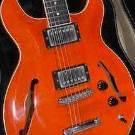
Thanks.

Edited by scottcald

15 answers to this question

Recommended Posts

  • 0
Posted
3 hours ago, Dave Scepter said:

Titebond II or III with clamping 

Thanks, since there were several, I wasn't sure which would be best for it. Appreciate it. 

  • Like 2
  • 0
Posted

Titebond if it's wood to wood!

  • Like 1
  • 0
Posted

Do not use Titebond II or III, or TB's horrid brown bottle "hide glue" incarnation, to work on guitars.

Use original red label red cap Titebond I. 

Ask Google the question "which Titebond for luthiery?" and it will share more legit insight than I spout off the top of my very forgetful head.

  • Like 6
  • 0
Posted
4 hours ago, Jeff R said:

Do not use Titebond II or III, or TB's horrid brown bottle "hide glue" incarnation, to work on guitars.

Use original red label red cap Titebond I. 

Ask Google the question "which Titebond for luthiery?" and it will share more legit insight than I spout off the top of my very forgetful head.

Yeah... only the original. Titebond II and III are intended for wood that may be outdoors, and remain rubbery, unlike the original Titebond. 

  • Like 3
  • 0
Posted

Oh ffs... I've been using Titebond II for decades on all my guitar repairs/modifications without one single issue 🙄.. just got done dowling a couple of Floyd rose posts... sanded flat and painted 

  • Haha 2
  • 0
Posted

Nice going, Dave. Now you have to go back and re-break everything so you can use the right glue. Hack.

  • Haha 4
  • 0
Posted (edited)

My latest strat project before the sanding and paint... I can guarantee you non-believers that the glue is 10 times stronger than the actual repaired wood 🙄

Screenshot_20260830_091939_Gallery.jpg

With that being said, I will bow down to all you experts...

Screenshot_20260830_092744_Google.jpg

Edited by Dave Scepter
  • Like 4
  • 0
Posted

I once used tightbond ll and floor sanding dust to fill very large gaps in a wood floor. Gallon jug glue glue glue mix in the floor sanding dust as it was the same color. Took some straps and stomped them into it a after the hole was filled . It got hard as a rock. Hit with the floor sander and you'll never know there was a 2" gap there. I think the big thing with 2 And 3 is the water resistance. But I still use 2 for wood to wood repairs.

  • Like 2
  • 0
Posted
18 minutes ago, velorush said:

Never knew there was a II or a III. I don't get out much.

Yeah TB-III may be a little too water resistant for guitars... but I've used I & II for decades 

  • Like 1
  • 0
Posted

Simplified, I is water soluble (and the cheapest of the three formulas), II is considered water resistant, III is considered waterproof.

Nitpicky as it relates to guitar repairs, sure ... until you have to clean up squeeze-out onto/into an old and/or checked finish (binding repairs and head breaks immediately come to mind); or redo a bond due to a re-break, an unforeseen misalignment (pieces drift, glide or slide during tape-up or clamp up, it happens to the best of us) ... or an aging joint's swell or "creep" over time due to environmental exposures, that may require a separate-and-start-over approach for best results.

In all those cases, red label, wet or dried, can be compromised and/or cleaned up with hot water or steam and a toothbrush or a soft-metal-bristled brush, with little if any risk to the surrounding finish, binding, whatever. Green and blue label cleanups and removals are more delicate and intense, more time consuming, and includes a LOT MORE cuss words. 

I "can" drive a nail with a hammer, a rock or my forehead, but the consensus is the hammer is the best tool for the job. I can use any of the Titebonds to fix guitars, sure, but red is the consensus for guitar work. Just use red label, even if only as a favor to whoever may have to possibly revisit your fix years or decades from now.

  • Like 4
  • Thanks 1
  • 0
Posted
18 hours ago, Jeff R said:

Simplified, I is water soluble (and the cheapest of the three formulas), II is considered water resistant, III is considered waterproof.

Nitpicky as it relates to guitar repairs, sure ... until you have to clean up squeeze-out onto/into an old and/or checked finish (binding repairs and head breaks immediately come to mind); or redo a bond due to a re-break, an unforeseen misalignment (pieces drift, glide or slide during tape-up or clamp up, it happens to the best of us) ... or an aging joint's swell or "creep" over time due to environmental exposures, that may require a separate-and-start-over approach for best results.

In all those cases, red label, wet or dried, can be compromised and/or cleaned up with hot water or steam and a toothbrush or a soft-metal-bristled brush, with little if any risk to the surrounding finish, binding, whatever. Green and blue label cleanups and removals are more delicate and intense, more time consuming, and includes a LOT MORE cuss words. 

I "can" drive a nail with a hammer, a rock or my forehead, but the consensus is the hammer is the best tool for the job. I can use any of the Titebonds to fix guitars, sure, but red is the consensus for guitar work. Just use red label, even if only as a favor to whoever may have to possibly revisit your fix years or decades from now.

Thanks for the detail, Jeff, much appreciated.  As with most things, haven't gotten to it as some house projects jumped out of nowhere and of course always take more time than you think they will.

  • Like 1

Join the conversation

You can post now and register later. If you have an account, sign in now to post with your account.

Guest
Answer this question...

×   Pasted as rich text.   Paste as plain text instead

  Only 75 emoji are allowed.

×   Your link has been automatically embedded.   Display as a link instead

×   Your previous content has been restored.   Clear editor

×   You cannot paste images directly. Upload or insert images from URL.

×
×
  • Create New...